skip to content

Department of Medicine

Read more at: Hidden mpox exposure detected in healthy Nigerian adults, revealing under-recognised transmission

Hidden mpox exposure detected in healthy Nigerian adults, revealing under-recognised transmission

20 January 2026

In a study published today in Nature Communications , Dr Adam Abdullahi, Professor Ravindra Gupta and colleagues show that exposure to the mpox virus can occur without recognised illness, and that residual immunity from historic smallpox vaccination continues to shape how the virus spreads in human populations.


Read more at: UK-Australia study awarded £7.4 million to investigate how menopause shapes heart health
Image of doctor using stethoscope

UK-Australia study awarded £7.4 million to investigate how menopause shapes heart health

20 January 2026

A new international study co-led by the University of Cambridge has received US $10 million (approximately £7.4 million) to explore how menopause affects women’s heart health. The funding will support the largest clinical trial of its kind aimed at detecting early, silent changes in the arteries and testing whether earlier...


Read more at: Cambridge and GSK announce new partnership to advance our understanding of the role of cells and tissues in disease, paving the way for new medical breakthroughs

Cambridge and GSK announce new partnership to advance our understanding of the role of cells and tissues in disease, paving the way for new medical breakthroughs

15 January 2026

GSK is investing nearly £10 million in this ground-breaking alliance that brings together the expertise of world-leading researchers from the Teichmann Laboratory with its own world-class scientific and translational capabilities.


Read more at: Targeting the immune system could prevent future heart attacks, clinical trial suggests

Targeting the immune system could prevent future heart attacks, clinical trial suggests

9 January 2026

Joseph Cheriyan, Ziad Mallat and colleagues have discovered that an existing therapy which boosts protective immune cells in people who recently had heart attacks reduces blood vessel inflammation and may reduce the likelihood of future heart attacks.


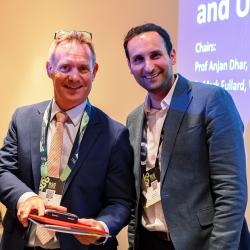
Read more at: Dr Nuru Noor awarded the United European Gastroenterology (UEG) Rising Star Awards 2026

Dr Nuru Noor awarded the United European Gastroenterology (UEG) Rising Star Awards 2026

5 January 2026

Nuru has been selected for two highly prestigious international awards – including a UEG rising star award and the ECCO young researcher of the year. These prizes reflect his contributions to clinical care, leadership and high levels of research impact in gastroenterology, particularly in the field of Inflammatory Bowel...


Read more at: UNESCO 'Women in Science' exhibition: Building an Atlas of Human Cells
Photo of Aviv Regev & Sarah Teichmann

UNESCO 'Women in Science' exhibition: Building an Atlas of Human Cells

17 December 2025

Professor Sarah Teichmann, Chair in stem cell medicine at the Cambridge Stem Cell Institute and the Department of Medicine, University of Cambridge, is featured in UNESCO’s Virtual Science Museum as part of their 'Women in Science' exhibition. Sarah co-leads the Human Cell Atlas , an international consortium to map every...


Read more at: Hydrogen sulfide signalling: new analytical tools and therapeutic perspectives

Hydrogen sulfide signalling: new analytical tools and therapeutic perspectives

10 December 2025

In a study led by Dr Jan Miljkovic and Professor Mike Murphy in Nature Communications, the team has developed a highly sensitive LC–MS/MS workflow that captures the sulfur atom of H₂S and the terminal sulfur atoms of RSS⁻ and RS(S)ₙS⁻ as diagnostic products in complex biological samples.


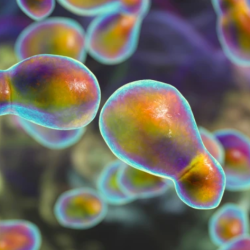
Read more at: Largest study of nose microbiome helps highlight those at risk of Staph aureus infection
an electron micrograph of S. aureus (credit: David Goulding - Wellcome Sanger Institute)

Largest study of nose microbiome helps highlight those at risk of Staph aureus infection

4 December 2025

A study of the human nasal microbiome by Ewan Harrison, Sharon Peacock and colleagues has allowed scientists to rethink how bacterial communities interact in the nose. People who persistently carry Staphylococcus aureus ( S. aureus ) in their nose have fewer species of other bacteria, while certain bacteria may help to...


Read more at: Bacteria tune their membranes to manage energy and resist drugs
Image of Escherichia coli

Bacteria tune their membranes to manage energy and resist drugs

1 December 2025

New research led by the Universities of Cambridge and Basel shows how bacteria regulate membrane channels to control nutrient flow and antibiotic uptake, revealing a hidden mechanism of drug resistance. A new study in Nature Microbiology , co-led by Professor Andres Floto at the Victor Phillip Dahdaleh Heart & Lung...


Read more at: Bird flu viruses are resistant to fever, making them a major threat to humans

Bird flu viruses are resistant to fever, making them a major threat to humans

28 November 2025

In a study published today in Science, Professor Sam Wilson and colleagues identified a gene that plays an important role in setting the temperature sensitivity of a virus. In the deadly pandemics of 1957 and 1968, this gene transferred into human flu viruses, and the resulting virus thrived.


Researchers in the news

Ravi Gupta (Cambridge Institute for Therapeutic Immunology and Infectious Disease) talks to the Mirror about the new Covid-19 ‘Cicada’ variant, which appears to be better at evading the body’s immune defences.


Andrea Lavinio (Medicine) is to lead a trial to assess whether a targeted cooling collar can improve patients' recovery from traumatic brain injuries, according to BBC Online


Ian Wilkinson (Medicine) tells the Guardian that tackling high blood pressure earlier could give people many more years of healthy life. He argues that we should begin monitoring blood pressure in secondary school and encourage a reduction in people’s salt intake and obesity.


Ravi Gupta (CITIID) speaks to New Scientist about a person who was left HIV-free after a transplant of non-HIV resistant stem cells.


Miles Parkes and Nuru Noor (Medicine) led a study which showed that using biologic drugs soon after a diagnosis of Crohn's disease, rather than when symptoms worsen, is five times more effective at controlling the disease, as reported by the BBCRead more on the CUH website.


Clare Bryant (Medicine) spoke to the Financial Times about new research in which scientists have edited the genes of pigs to resist swine fever. She said that just as there is no will to vaccinate animals in some countries, there might also be reluctance to use gene editing.


Shuaib Nasser (Medicine) spoke to the Daily Mail about a new nasal spray developed to treat life-threatening allergic reactions that is now available in the UK, saying that its compactness and ease of use may make it more practical than current devices for administering adrenaline.


Sharon Peacock (PACE) appeared on the Naked Scientists Titans of Science podcast talking about her work on whole genome sequencing of pathogens such as MRSA and SARS CoV-2, and studies of antimicrobial resistance.


Mike Weekes (ImID) spoke to the Independent about the risks of warmer temperatures and altered rainfall patterns caused by climate change leading to a spread of tropical diseases to Europe and the UK.