skip to content

Department of Medicine

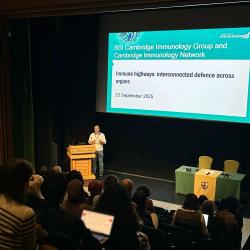
Read more at: Cambridge Immunology Forum 2025: Exploring immune highways across organs

Cambridge Immunology Forum 2025: Exploring immune highways across organs

26 September 2025


Read more at: Connecting minds, shaping frontiers: Department of Medicine Annual Research Day 2025
Picture of audiences at the Robinson College

Connecting minds, shaping frontiers: Department of Medicine Annual Research Day 2025

22 September 2025

Our Annual Research Day is the largest forum for presenting research by faculty, staff, and trainees in the Department of Medicine.


Read more at: Kidney transplant rejection associated with changes in the lymphatic vessels, research shows
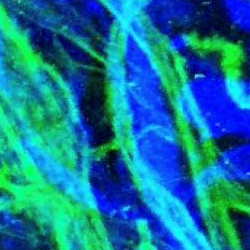
Credit: Daniyal Jafree / Lymphatic infiltration into kidney medulla

Kidney transplant rejection associated with changes in the lymphatic vessels, research shows

17 September 2025

Published in the Journal of Clinical Investigation, the research conducted by Professor Menna Clatworthy and colleagues at the Wellcome Sanger Institute, University College London (UCL) and the University of Cambridge sheds new light on a major unsolved challenge in kidney transplantation and could open the door to new...


Read more at: Depression linked to presence of immune cells in the brain’s protective layer
Silhouette photography of man  Credit: Gift Habeshaw (Unsplash)

Depression linked to presence of immune cells in the brain’s protective layer

1 September 2025

In research published today in Nature Communications , Dr Stacey Kigar and colleagues tested a hypothesis that chronic stress can lead to the release of neutrophils from bone marrow in the skull.


Read more at: Student recognised for tackling antimicrobial resistance
Photo of Dr Diarmuid O'Brien with Felicity Crawshay-Williams (credit: CSAR)

Student recognised for tackling antimicrobial resistance

8 August 2025

Felicity Crawshay-Williams (a final-year PhD student in the Department of Medicine) was presented with a PhD Student Award by the Cambridge Society for the Application of Research for her work tackling antimicrobial resistance.


Read more at: New treatment could reduce brain damage from stroke, study in mice shows
Woman visiting an elderly man in hospital  Credit: Sean Anthony Eddy (Getty Images)

New treatment could reduce brain damage from stroke, study in mice shows

31 July 2025

Professor Thomas Krieg and colleagues have developed and tested a new drug in mice that has the potential to reduce damage to the brain when blood flow is restored following a stroke.


Read more at: The Raymond C Read and Lillian J Gostick PhD Studentship: A legacy richly interwoven with education and scholarship
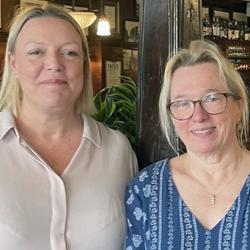
Professor Charlotte Summers, Director of the Victor Phillip Dahdaleh Heart & Lung Research Institute, and Dr Jennifer Read

The Raymond C Read and Lillian J Gostick PhD Studentship: A legacy richly interwoven with education and scholarship

17 July 2025

VPD-HLRI and Selwyn College are delighted to announce the establishment of a newly endowed PhD studentship, The Raymond C. Read and Lillian J. Gostick PhD Studentship, which will focus on epidemiology, public health, global health, or infectious disease research.


Read more at: Professor Ziad Mallat receives the 2025 Louis & Artur Lucian Award for Research in Circulatory Diseases
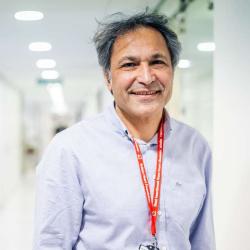
Photo of Ziad Mallat

Professor Ziad Mallat receives the 2025 Louis & Artur Lucian Award for Research in Circulatory Diseases

16 July 2025

Professor Ziad Mallat, Professor of Cardiovascular Medicine at the Department of Medicine and the Victor Phillip Dahdaleh Heart and Lung Research Institute, has been awarded this year’s Louis and Artur Lucian Award for Research in Circulatory Diseases .


Read more at: At the heart of life-changing science: Victor Phillip Dahdaleh Heart & Lung Research Institute 3rd Anniversary
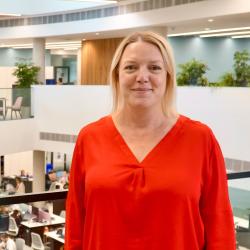
Picture of Charlotte Summers

At the heart of life-changing science: Victor Phillip Dahdaleh Heart & Lung Research Institute 3rd Anniversary

15 July 2025


Read more at: Professor Clare Bryant awarded prestigious ERC Advanced Grant for zoonotic infection research
Photo of Clare Bryant

Professor Clare Bryant awarded prestigious ERC Advanced Grant for zoonotic infection research

11 July 2025

Professor Bryant receives European Research Council funding alongside Wellcome Trust Discovery Award and BSI Outstanding Leadership Award for her pioneering work on innate immunity and host inflammatory responses.


Researchers in the news

Mike Murphy (Medicine / MRC Mitochondrial Biology Unit) tells the Naked Scientists that if we can learn how to repair mitochondria – the ‘batteries’ that power our cells – we could open up entirely new possibilities for medicine.


Chris Smith (Medicine), writing in the Daily Telegraph, said that antibiotic resistance poses a bigger threat to us than terrorism, but that he hopes AI will be transformative, helping scientists develop new antibiotics faster than ever.


Will Watson (Medicine / Queens' College) speaks to NakedScientists about the difference between healthy and diseased arteries, and how we can use non-invasive imaging technology to see on a CT scan who might be at risk and in need of treatment.


Clare Bryant (Medicine/Veterinary Medicine/Queens’ College) speaks to The Telegraph about inflammation, why it can cause problems and ways that we might lower levels of it in the body.


Ravi Gupta (Cambridge Institute for Therapeutic Immunology and Infectious Disease) talks to the Mirror about the new Covid-19 ‘Cicada’ variant, which appears to be better at evading the body’s immune defences.


Andrea Lavinio (Medicine) is to lead a trial to assess whether a targeted cooling collar can improve patients' recovery from traumatic brain injuries, according to BBC Online. 


Ian Wilkinson (Medicine) tells the Guardian that tackling high blood pressure earlier could give people many more years of healthy life. He argues that we should begin monitoring blood pressure in secondary school and encourage a reduction in people’s salt intake and obesity.


Ravi Gupta (CITIID) speaks to New Scientist about a person who was left HIV-free after a transplant of non-HIV resistant stem cells.


Miles Parkes and Nuru Noor (Medicine) led a study which showed that using biologic drugs soon after a diagnosis of Crohn's disease, rather than when symptoms worsen, is five times more effective at controlling the disease, as reported by the BBC. Read more on the CUH website.


Clare Bryant (Medicine) spoke to the Financial Times about new research in which scientists have edited the genes of pigs to resist swine fever. She said that just as there is no will to vaccinate animals in some countries, there might also be reluctance to use gene editing.


Shuaib Nasser (Medicine) spoke to the Daily Mail about a new nasal spray developed to treat life-threatening allergic reactions that is now available in the UK, saying that its compactness and ease of use may make it more practical than current devices for administering adrenaline.


Sharon Peacock (PACE) appeared on the Naked Scientists Titans of Science podcast talking about her work on whole genome sequencing of pathogens such as MRSA and SARS CoV-2, and studies of antimicrobial resistance.


Mike Weekes (ImID) spoke to the Independent about the risks of warmer temperatures and altered rainfall patterns caused by climate change leading to a spread of tropical diseases to Europe and the UK.